
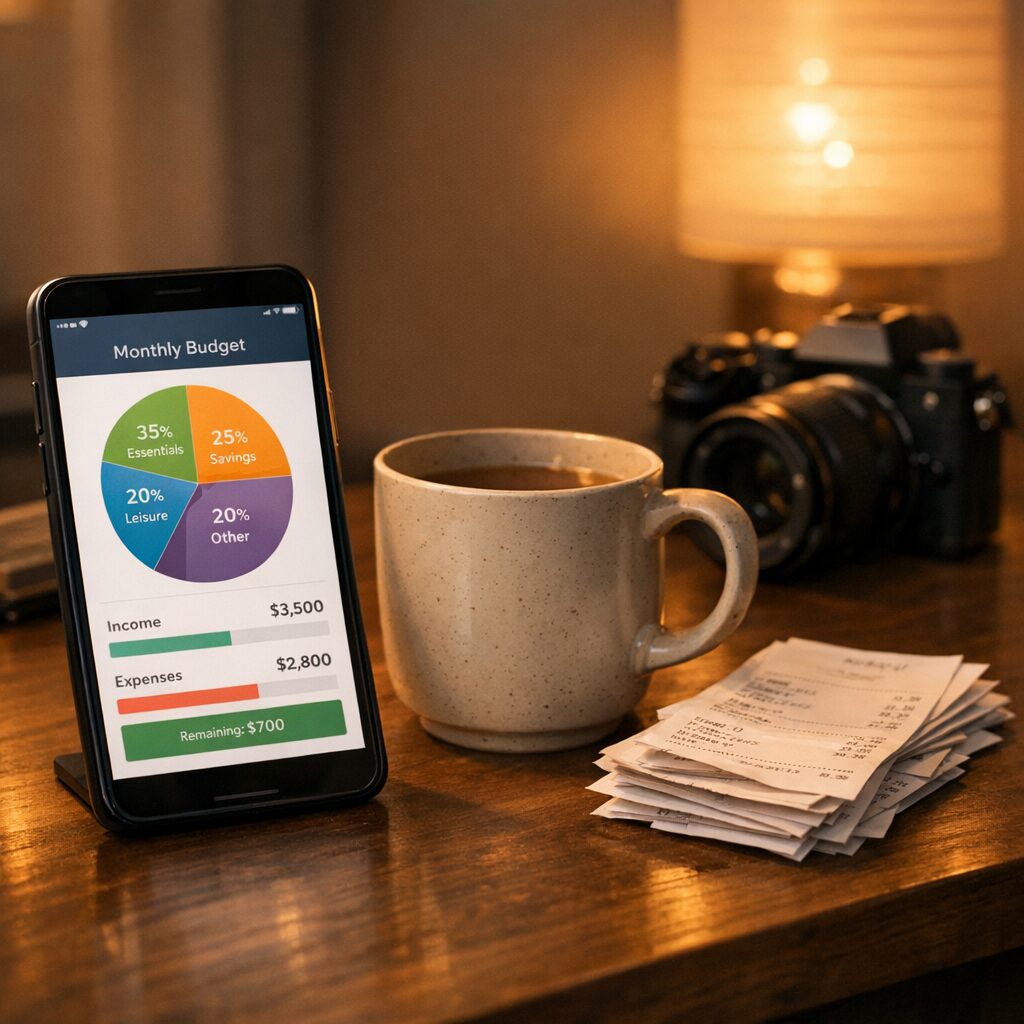
7 Smart Personal Finance Tools to Help You Curb Your Spending
7 Smart Personal Finance Tools to Help You Curb Your Spending
Trying to rein in your budget is one thing—actually *doing* it is another. Between late-night impulse buys and the ever-tempting “add to cart” button, modern spending can feel like a constant tug-of-war between discipline and desire. Luckily, the right technology can turn your finances from chaos into clarity.
If your wallet is on life support by mid-month, this post is your tactical upgrade. Let’s dive into **seven personal finance tools that help you track, analyze, and ultimately curb your spending** so you can shift from “where did my money go?” to “look what I saved.”
*(Inspired by the insights from the Source article).*
Why You Need Tools to Curb Spending
Budgeting manually worked—when coffee cost $1.25 and you actually used cash. Today, with contactless payments, subscriptions, and instant transfers, it’s easy to lose sight of where your money is flowing.
Personal finance tools act like your **financial GPS**: they reveal spending patterns, highlight problem areas, and even automate savings. The right app doesn’t just show numbers—it gives context and control.
7 Tools That Keep Your Spending in Check
Let’s break down seven top-performing tools that work for real people—not just finance influencers.
1. Mint: The Budgeting Classic That Keeps You Honest
**Why it works:** Mint syncs to your bank and credit accounts, categorizing every transaction automatically. Visual charts give instant feedback on your spending habits.
**Best for:** Beginners who want a clear snapshot of where their money goes each month.
**Key feature:** Custom alerts notify you when you’re overspending in specific categories.
2. You Need a Budget (YNAB): The Envelope System, Digitized
**Why it works:** YNAB forces every dollar to have a job. You assign future spending based on past trends, ensuring you live within real income—not future hope.
**Best for:** Planners who want to *actively* manage rather than passively track.
**Key feature:** A philosophy-first approach built around accountability and flexibility.
3. PocketGuard: Simple, Secure, and Straight to the Point
**Why it works:** PocketGuard calculates what’s “safe to spend” after accounting for bills, saving goals, and recurring payments.
**Best for:** Anyone who just wants to know, “Can I afford this?”
**Key feature:** The “In My Pocket” metric instantly shows remaining spendable income.
4. Monarch Money: For Couples and Shared Goals
**Why it works:** Monarch combines intelligent budgeting with shared dashboards and goal tracking. Perfect for dual-income households wanting to collaborate transparently.
**Best for:** Couples and households managing shared expenses.
**Key feature:** Real-time visibility for joint financial goals.
5. Empower (formerly Personal Capital): The Investor’s Choice
**Why it works:** While it tracks spending, it’s built for those managing both day-to-day expenses and investments.
**Best for:** People balancing short-term budgeting with long-term wealth building.
**Key feature:** Portfolio analysis alongside cash flow tracking.
6. Rocket Money: Your Subscription Sheriff
**Why it works:** Rocket Money scours your accounts for unused subscriptions—then lets you cancel them instantly.
**Best for:** Anyone who can’t remember how many free trials they forgot to cancel.
**Key feature:** Automatic detection and cancellation of recurring charges.
7. Goodbudget: Envelope Budgeting Without Paper Envelopes
**Why it works:** Divides your monthly income into digital “envelopes” so you can visually see what’s left for groceries, dining, and entertainment.
**Best for:** Visual learners and those who prefer manual allocations.
**Key feature:** Shared envelopes for syncing with a partner.
Use Cases: How These Tools Change Real Lives
Case 1: The Impulse Shopper Turned Tracker
Alex—an e-commerce addict—used PocketGuard to understand how much was actually left for “fun money.” Within two months, weekly impulse buys dropped by 40%, saving $300 monthly.
Case 2: The Couple Finding Financial Clarity
Lena and Jordan synced their accounts with Monarch Money. The shared dashboard eliminated guesswork and “Venmo fights.” They redirected saved cash into a travel fund, booking their first international trip together—debt-free.
Case 3: The Over-Subscriber Getting a Reality Check
Sam discovered through Rocket Money that he was still paying for three streaming services and two gym memberships. Cancelling unused subscriptions freed up $75 per month, later set to auto-transfer into a high-yield savings account.
Try This in 10 Minutes: Your Quick-Start Method
Want to start trimming expenses *today*? Here’s your 10-minute action plan:
1. **Choose one tool** (start simple—Mint or PocketGuard).
2. **Connect one bank account** to get instant spending data.
3. **Review the last 7 days** of transactions—look for one pattern (like “too many takeout meals”).
4. **Set one goal**: either limit or redirect that spending category next week.
5. **Set an alert** for any new recurring charge or overspending flag.
That’s it. In 10 minutes, you’ll have the foundation for a smarter, leaner financial system.
FAQs About Spending Tools
**1. Are personal finance apps safe to use?**
Yes—reputable apps use bank-level encryption and read-only connections. They can analyze your data but can’t move or modify money. Always enable two-factor authentication.
**2. Can I really change my spending habits with an app?**
Absolutely. While the app doesn’t make your decisions, it *changes your awareness*. Real-time data highlights those “small” expenses that quietly sabotage your goals.
**3. Do these tools cost money?**
Most have free versions with optional paid plans. Even premium tiers (like YNAB) often pay for themselves after a month of mindful spending.
The Bottom Line: Tools Don’t Restrict You—They Empower You
Curbing spending doesn’t mean giving up joy; it means defining value. The right tools act as financial allies—showing you what matters, where you waste, and where you can win.
Start with one app, master it, and layer in more as needed. Within weeks, you’ll spend smarter, save more, and finally *feel* in control of your money—not the other way around.
Now’s the time: open the app store, pick your platform, and watch your financial foundation strengthen one click at a time.